

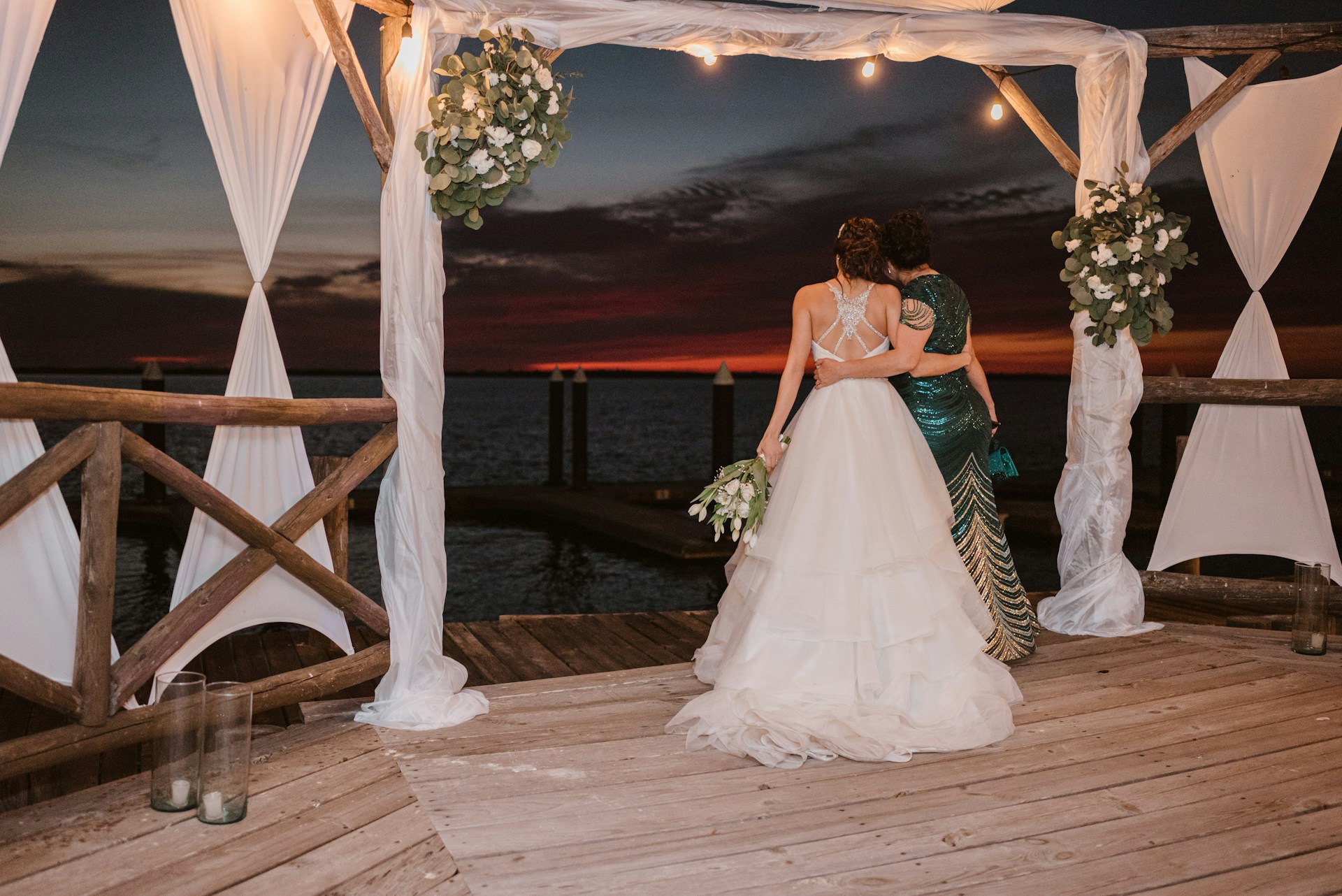
I once watched a bride freeze mid-fitting, staring at a row of bridesmaid dresses in pale sage while her mother held up a navy lace gown with quiet determination. “It’s not the same green,” someone whispered. The air tightened slightly. Not hostile. Just fragile.
Weddings have a way of amplifying small decisions.
Coordinating your outfit with the bridesmaids and the mothers is less about colour swatches and more about understanding roles. Bridesmaids are there to frame the bride visually. They create cohesion in photographs, symmetry at the altar, a sense of considered planning. The mothers, meanwhile, carry something different — family presence, dignity, a touch of tradition. Their clothes signal continuity rather than choreography.
When those roles blur, tension follows.
Colour is usually the first battleground. Many couples assume coordination means exact matches, but that approach can feel rigid. A broader palette works better. If bridesmaids are wearing soft blush, that doesn’t mean the mothers must echo the same shade. A deeper rose, a muted taupe, even an elegant metallic can complement without copying.
I have seen photographs where subtle tonal variation created far more depth than identical gowns ever could.
The same principle applies to the bride’s own choices, particularly if she opts for a second dress or a modern silhouette. Coordination does not require surrendering individuality. It requires awareness. If the bridesmaids are in flowing chiffon, a heavily structured, embellished mother-of-the-bride outfit might feel disconnected. Likewise, a sleek, minimal bridal gown pairs more naturally with understated, tailored bridesmaid dresses.
Fabric speaks quietly but clearly. Satin reflects light differently than crepe. Lace introduces texture. Chiffon moves. Even within one colour family, texture can prevent the line-up from appearing flat. Bridesmaids might share a hue but vary in neckline or sleeve length. Mothers may choose structured fabrics that offer support and polish.
Comfort deserves more respect than it usually receives in these conversations.
A wedding day is long. There are stairs, hugs, speeches, photographs taken in awkward positions. Bridesmaids often appreciate flexibility in silhouette — wrap styles, adjustable straps, or differing sleeve options within a consistent colour scheme. Mothers, particularly at formal ceremonies, tend to prioritise coverage and quality tailoring. An elegant mother of the bride dress should feel secure, breathable, and easy to move in.
When someone feels physically at ease, it shows in the shoulders first.
Season and venue quietly dictate much of what works. A summer garden ceremony allows for softer fabrics and lighter tones. An autumn reception in a grand hotel ballroom invites richer colours and more structured designs. Ignoring the setting is one of the quickest ways to make coordination feel forced.
I remember standing at a winter wedding where the bridesmaids wore pale lilac chiffon outdoors in December, and I felt a pang of sympathy watching them shiver between photographs.
Accessories often solve problems that fabric cannot. Coordinated shoes in complementary tones, subtle jewellery guidelines, even matching wraps for cooler evenings can create cohesion without uniformity. Floral accents help, too. A corsage that echoes bouquet colours ties the mothers gently into the palette without demanding imitation.
Communication, however, is the real foundation.
Early conversations about colour direction, level of formality, and general mood prevent last-minute friction. Mood boards work. So do honest discussions. It helps to clarify what matters most — is it exact shade matching, or overall harmony? Is there flexibility in silhouette? Can mothers choose from a range within a defined palette?
The most successful weddings I’ve observed shared one trait: clarity without control.
Over-coordination can feel stiff. Under-coordination risks visual chaos. The balance lies somewhere in between — structured guidance paired with personal choice. When bridesmaids feel considered rather than costumed, and mothers feel respected rather than managed, the result is evident.
Photographs capture more than colour alignment. They capture ease. When everyone stands comfortably, when fabrics move naturally, when tones complement rather than compete, the entire scene settles.
That quiet sense of cohesion is rarely accidental. It is the outcome of thoughtful decisions made early, with attention to role, setting, and personality.
And when it works, no one comments on the coordination at all.